Language Processing in Aging: Current State and a Future Research Agenda – Invited Talk at the 38th National Linguistics Conference (2025)
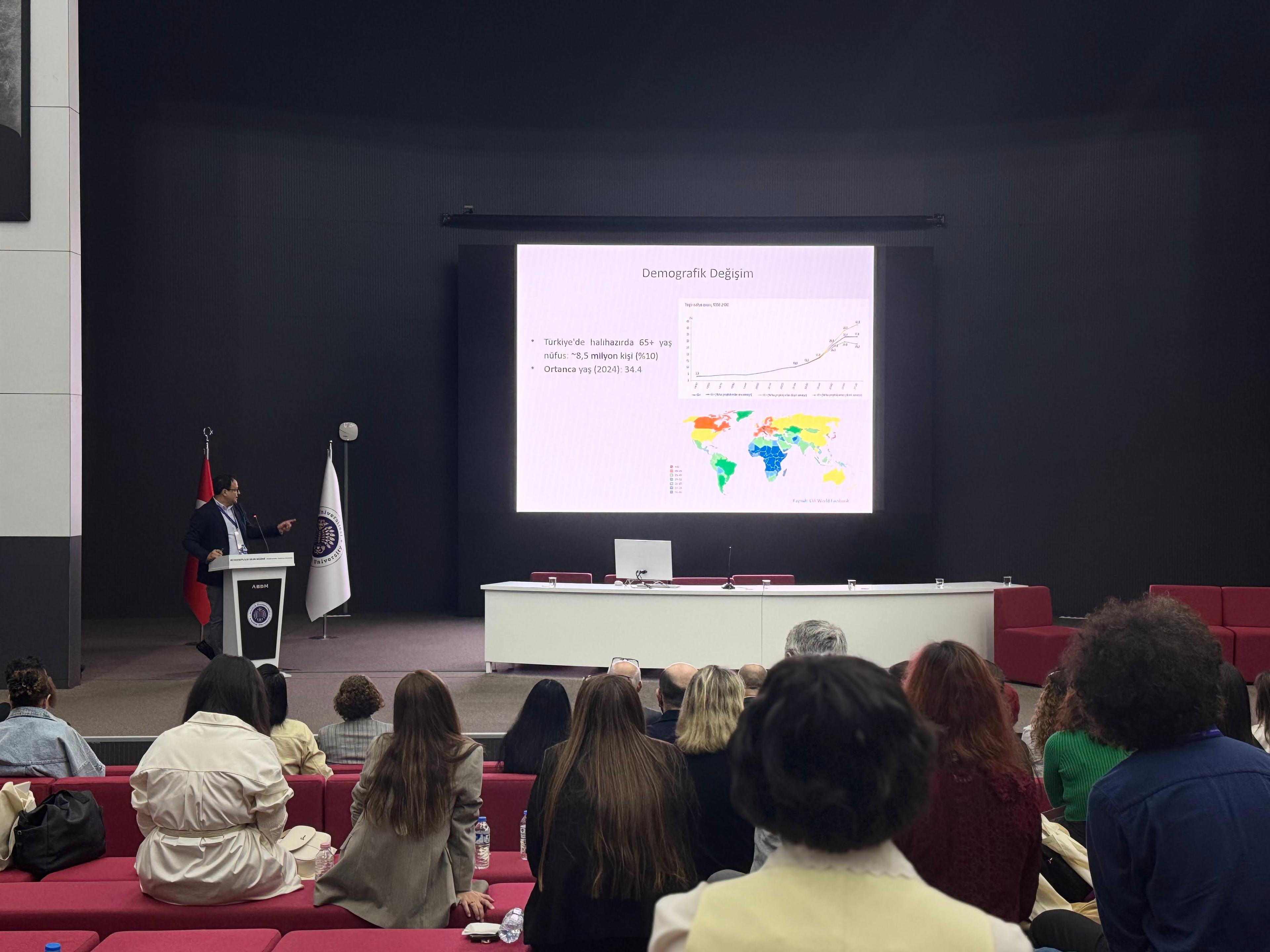
In his invited talk at the 38th National Linguistics Conference held in Erzurum, Prof. Dr. Bilal Kırkıcı discussed how language is processed during aging, how it interacts with cognitive changes, and why this field represents one of the key research agendas of the future.
Language Processing in Aging: Current State and a Future Research Agenda
Prof. Dr. Bilal Kırkıcı – Invited Talk, 38th National Linguistics Conference (2025)
At FabuLAB, research is conducted not merely to develop new technologies, but to understand the human mind, language, and learning across the lifespan. At the core of this endeavor lies the scientific modeling of aging, cognition, and language processing.
Starting Point of the Research
The majority of linguistic studies are carried out with young, neurotypical, and university-educated participants.
This leads to a significant underrepresentation of older adults’ cognitive and linguistic profiles in scientific research.
In his presentation at the National Linguistics Conference, Prof. Dr. Bilal Kırkıcı aimed to make this gap visible and proposed a comprehensive research agenda to better understand language processing in aging individuals.
Key Findings
Language and aging: While fluid intelligence declines with age, crystallized intelligence increases through accumulated knowledge; this shift alters language processing strategies.
Compensatory mechanisms: With age, the brain redistributes cognitive load toward frontal regions, developing new balancing mechanisms.
Language production: The “tip-of-the-tongue” phenomenon becomes more frequent among older adults; phonological access weakens, but the semantic system remains intact.
Comprehension processes: Older adults rely on greater cognitive resources to achieve the same level of understanding — demonstrating the importance of neural flexibility and compensatory strategies.
Pragmatic skills: High-level skills such as turn-taking, figurative language interpretation, and humor comprehension may decline, though social interaction serves as a supportive factor.
FabuLAB’s Research Vision
This study reflects three core principles that also guide FabuLAB’s R&D philosophy:
1. Science responsive to societal needs: Supporting the language learning potential of older adults
2. Scientific innovation: Redefining aging through linguistic and cognitive perspectives
3. Bridging theory and practice: Translating experimental findings into age-friendly language learning technologies
This work represents one of the first steps in FabuLAB R&D’s vision to build a Turkey-based scientific ecosystem at the intersection of aging, language, and cognition, and stands as a tangible example of research that unites scientific depth with social impact.